Original art practice
One-of-a-kind sculpture, commissions, exhibitions, wearable work, design objects, and public installations built through Lonnie Q. Ingram’s original wire-construction language.
Lonnetrix is a system
An original art practice, a construction language, a teaching method, a nonprofit access model, and a cultural enterprise working as one.
The central idea
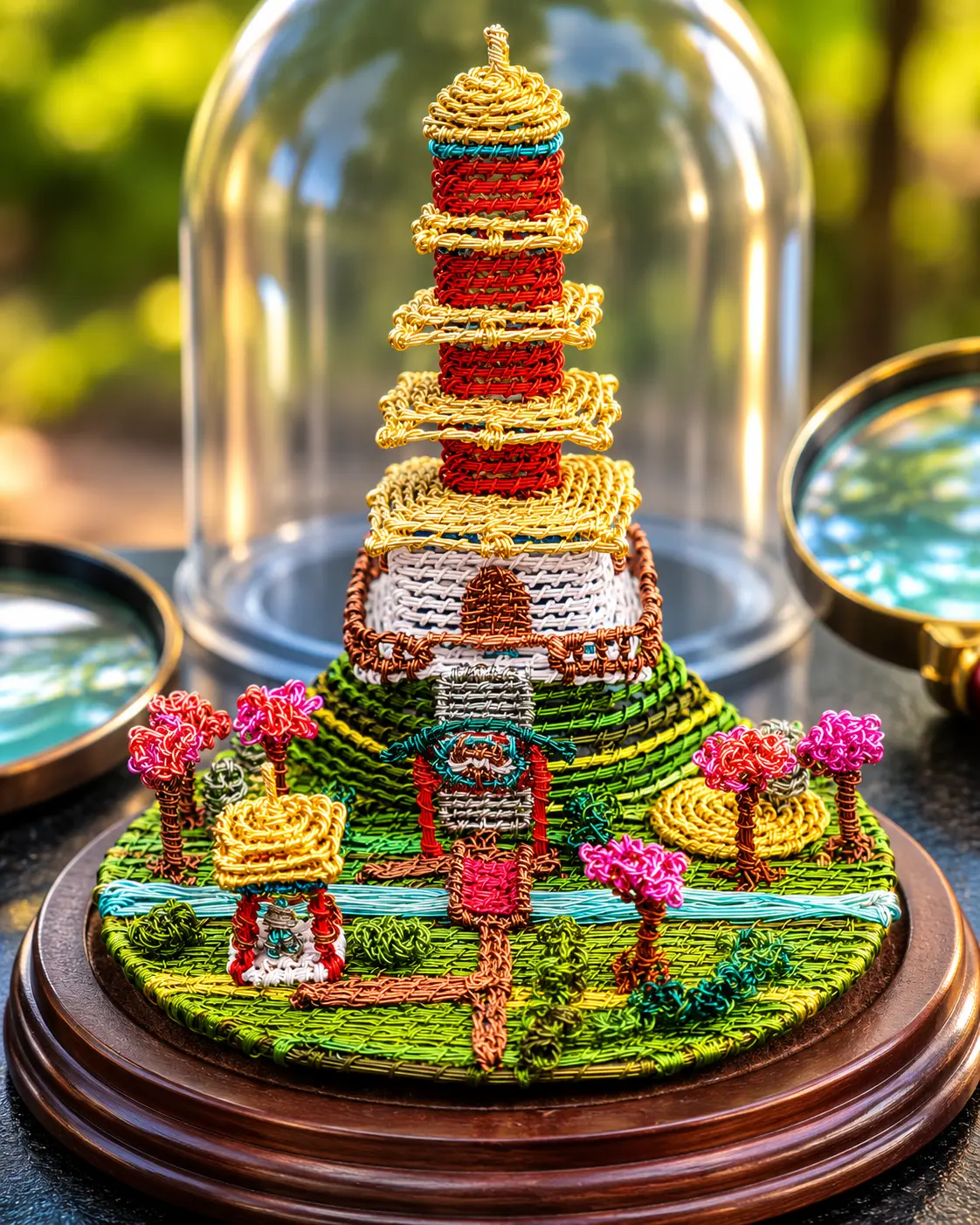
Lonnetrix begins with Lonnie Q. Ingram’s original wire-construction language, but it does not end with an object.
The same ideas that hold a sculpture together—connection, repetition, balance, flexibility, structure, and patient problem-solving—also organize the educational and charitable work. Studio practice creates the evidence. Teaching makes the method accessible. Community programs remove barriers. Partnerships provide reach. Sales, commissions, sponsorships, and donations help the cycle continue.
Wire functions as contour, structure, texture, mass, and surface at the same time. The process draws from sculpture, weaving, engineering, architecture, mathematics, design, and storytelling. Lonnetrix applies that same interconnected thinking beyond the studio: every program, commission, partnership, and public experience supports a larger mission of artistic excellence and access.
Five connected parts
Each part can stand alone, but the strongest result comes when art, learning, access, community, and enterprise reinforce one another.
One-of-a-kind sculpture, commissions, exhibitions, wearable work, design objects, and public installations built through Lonnie Q. Ingram’s original wire-construction language.
Demonstration and hands-on instruction translate the practice into spatial reasoning, patience, geometry, design, storytelling, and creative agency.
Lonnetrix Inc., established in 2018 as a 501(c)(3), brings free and low-cost art experiences to communities that face barriers of cost, transportation, or institutional access.
On the Move carries the artist, materials, instruction, and encouragement into schools, festivals, libraries, homes, youth programs, and neighborhood spaces.
Sales, commissions, workshops, sponsorships, partnerships, and donations reinforce one another so original creation and public access can grow together.
The construction language
A single strand can describe an edge. Repeated strands create a plane. Intersections create stability. Layers create volume, character, texture, and meaning.
Contour and gesture begin the form.
Twists and wraps turn separate elements into structure.
Repetition creates rhythm, texture, and strength.
Layered lines become mass without hiding the hand-built process.
Tension and proportion keep complex forms stable.
Technical decisions become character, place, memory, and imagination.
The participant pathway
The educational experience is designed so participants meet a working artist, understand a process, make their own decisions, and leave with evidence of their ability.
See authentic finished work and hear how a childhood experiment became an original artistic language.
Handle accessible material and test line, pattern, joining, balance, and structure.
Make an original form through guided technique and independent decisions.
Describe choices, challenges, meaning, and discoveries through making and conversation.
Share work, contribute to a collective environment, and recognize the ideas of others.
Leave with a finished work, a new way of seeing, and a clear invitation to keep creating.
Translate an idea into a stable three-dimensional form.
Practice coordinated and purposeful hand movements.
Explore pattern, symmetry, proportion, repetition, and geometry.
Make choices, revise ideas, and complete an original work.
Create beside peers, families, educators, and neighbors.
Experience mistakes as information and persistence as a creative tool.
Theory of change
When people gain free or affordable access to a skilled working artist, adaptable materials, respectful instruction, and a visible opportunity to share what they make, creative confidence can grow.
Participants develop artistic and problem-solving skills. Communities gain connection and cultural assets. The artist-led organization gains the capacity to sustain high-quality public experiences. The goal is not simply to complete an activity; it is to make imagination usable.
Lonnetrix looks at participation and access, completion of original work, understanding of foundational art and STEAM concepts, creative confidence, persistence and revision, partner satisfaction, and the quality of program delivery. Reflection, observation, host feedback, participation records, and responsible documentation help the organization improve.
The creative team
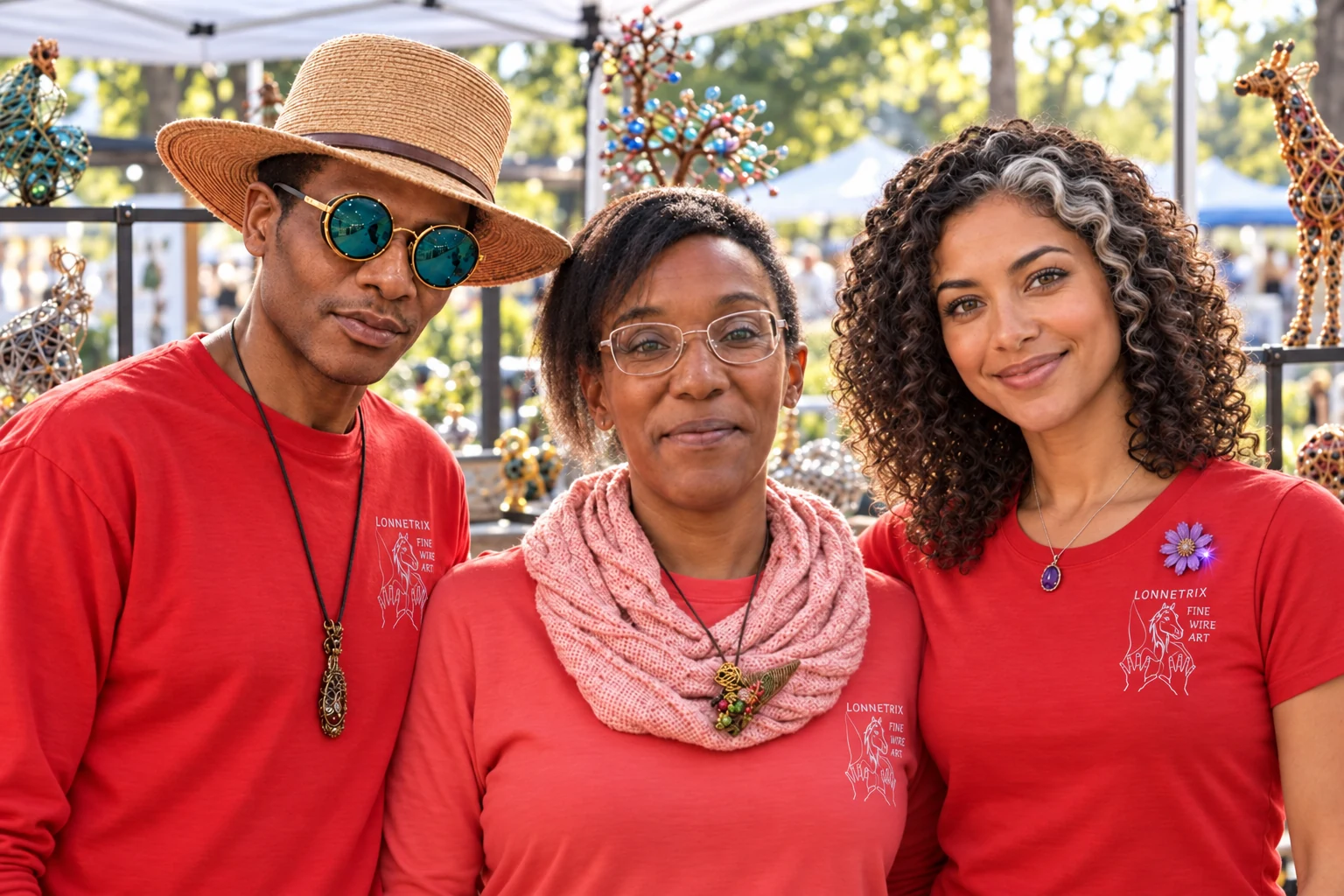
Lonnetrix grows through the people who help connect its art, teaching, research, storytelling, and community work.
Meet Aster Averi
Aster supports independent film, arts, research, storytelling, outreach, and project development with a curious eye, thoughtful judgment, and a love of great cinema.
Meet Aster →Enter the system
Support the living studio practice through original artwork and custom sculpture.
Commission a work →Bring artist-led learning to a school, organization, festival, workplace, or neighborhood.
Explore programs →Underwrite materials, teaching, travel, documentation, or a complete community experience.
See funding paths →Create an exhibition, activation, public work, sponsorship, or multi-site initiative.
Begin a conversation →Begin a conversation
Tell Lonnetrix what your audience, institution, community, collection, or idea needs—and where possibility could travel next.